Showing posts with label anegada. Show all posts

Tuesday, May 20, 2008

Bird Island


Our second stop on the "Islands A-Z" tour is Bird Island!

Bird Island, the northernmost island of the Seychelles archipelago, is known as the home of “birds innumerable”. It’s name comes from the huge amount of birds that were reported by a passing ship in 1776. Over the years, the birds started to disappear. When the island was bought in 1967, the birds were almost gone. The owner and his partners have made great strides in building a better place for the birds and, as a result, the birds are returning! Today, there are over 20 species that can be seen on the island!

Not only has the group worked to preserve the birds, but they also have conservation efforts underway to help the tortoises. In fact, Esmerelda, the largest tortoise in the world (per Guinness Book of Records), resides on Bird Island! How neat is that!?

If you visit Bird Island, you can stay at the one hotel on the island, the Bird Island Lodge. There is no tv, phone, air conditioner or pool….so you really, really, really are forced to just take it easy and relax!

If you want to go back and visit Anegada from last week, just check the sidebar for a link!

Monday, May 12, 2008

Anegada Flora and Fauna

This post is part of my "Islands A-Z" series. You can read more about Anegada B.V. I. here.

Today I'm going to share some of the plants I read about that can be found on Anegada, B.V. I. Enjoy!

Sea Grape Trees: grows well in sandy areas; fruit can be used in jams and jellies. In fact, here's a recipe for Sea Grape Jelly you can try!

photo courtesy of Trade Winds Fruit

Bay Lavender: Also known as Sea Lavender.

photo courtesy of Killer Plants

Wild Orchids:
Photo courtesy of Cow Wreck Beach Resort

Loblolly Trees:
Photo courtesy of Antigua Museums

Wild Sage:
photo courtesy of Sean Carrington @ Plants of the Eastern Caribbean

Gumbo Limbo:
photo courtesy of wikipedia

Frangipani: Also known as plumeria...and smells very nice! Frangipani was actually an Italian perfume that was used to scent gloves in the 16th century. When people smelled the scent of this flower, it reminded them of the perfume and that's how it got it's name! source: hubpage

photo courtesy of Cow Wreck Beach Resort

Poke-Me-Boy: Endangered and grows only on a small patch of limestone on the island. I couldn't find a photo but there is more info here.

Yellow Century Plant: This is very neat plant...it looks like an aloe but it's really more like a cactus. After about 20 years of growing, it will shoot out a stalk that grows around 8" a day! When it reaches a certain height, it starts to blossom with yellow flowers.

photo courtesy of St. John Beach Guide

Of course, these are just a few of the plants found on Anegada, B.V. I. I'm sure there's even much more in the "Outback". I think my favorite would be the Yellow Century Plant...that one is just completely cool!! Tomorrow I'll post about some of the animals found on this island...

Sunday, May 11, 2008

Anegada: The Drowned Island

I had planned on making this whole Islands A-Z series only one post per island, but I'm finding that there is just too much interesting things to write about and I think one long post would be a snoozefest! So this week, I'll probably write several different posts about the island I've chosen to cyber-tour. Next week may be different though. I'll just adopt the island way of life and be "laid-back" about the whole thing!

map courtesy of Pusser's

I'm starting my island cyber-tour by visiting Anegada, B.V.I. (British Virgin Islands). This neat little island is the northernmost island of the B.V.I and is only 10 miles long by 2.5 miles wide. The island's name comes from the fact that the island is flat and only 30 feet above sea level....Anegada is loosely translated as meaning "drowned island". While all the other B.V.I. were created by volcanoes, Anegada is more like a coral atoll and is almost completely surrounded by the 18 mile long Horseshoe Reef. Of course, anytime you have a reef that large you also have a lot of shipwrecks which make this island a great place to snorkel and scuba dive!

I've divided the island into areas. Our first stop is Loblolly Bay where we find a lovely beach and lots of seagrape trees and bay lavender. Serving all of us on the beach are two bars: Big Bamboo and Flash of Beauty. Snorkeling in this area is great!

photo courtesy of Bareboats BVI

We next head on over to Cow Wreck Beach, because we all know that one beach a day is not enough, right? Like, Loblolly Bay, this beach is ocean side and is just as lovely.

photo courtesy of Cow Wreck Beach Resort

This beach is famous for all the cow bones that washed ashore from a wrecked ship. Uh, ok...can you imagine the people who discovered all of these cow bones on the beach! lol!! Sheesh-a-moley!!

Next we're heading into town which is called The Settlement.

photo courtesy of The Ocean Adventure

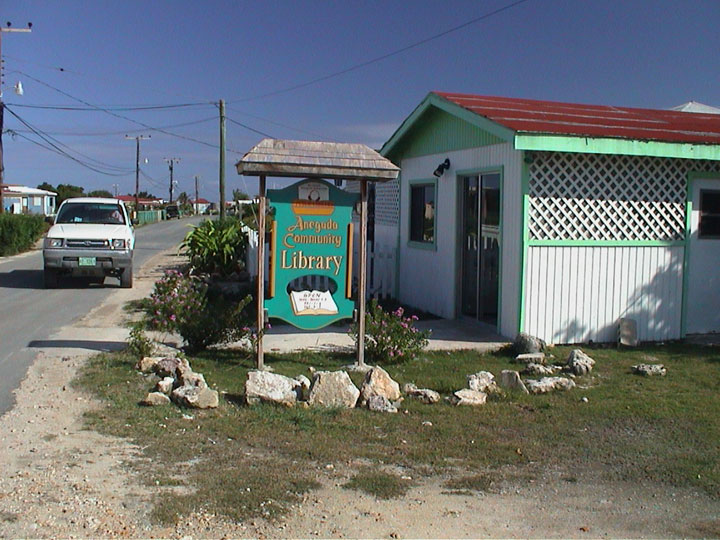
This is where the local Anegadans live and here you'll find two grocery stores, a general store, police office, post office, a hotel, a bar, two restaurants and even a library!! The island residents don't carry wallets because all business is done under the "honor system"...wow! That really is laid back!

After checking out The Settlement we'll travel over to The "Outback" We'll know we've hit that area when we start to see mud puddles...these won't be the typical mud puddles though because they will be chalky white. Remember, Anegada is a coral island!


In The "Outback" we'll see a lot of interesting plants which I'll be posting about tomorrow. Just a hint though...you'll see a lot of gumbo limbo and frangipani!

Well, that's a start, folks! There's much, much more to discover about Anegada so check back through the week. I plan on posting about the different animals, restaurants/shops, activities, shipwrecks and accommodations found on Anegada. I hope you'll join me!!